
Treats are one of the easiest ways to communicate with a dog:
- “You did great.”
- “I like what you just did—do it again.”
- “Life is good, have a little snack.”
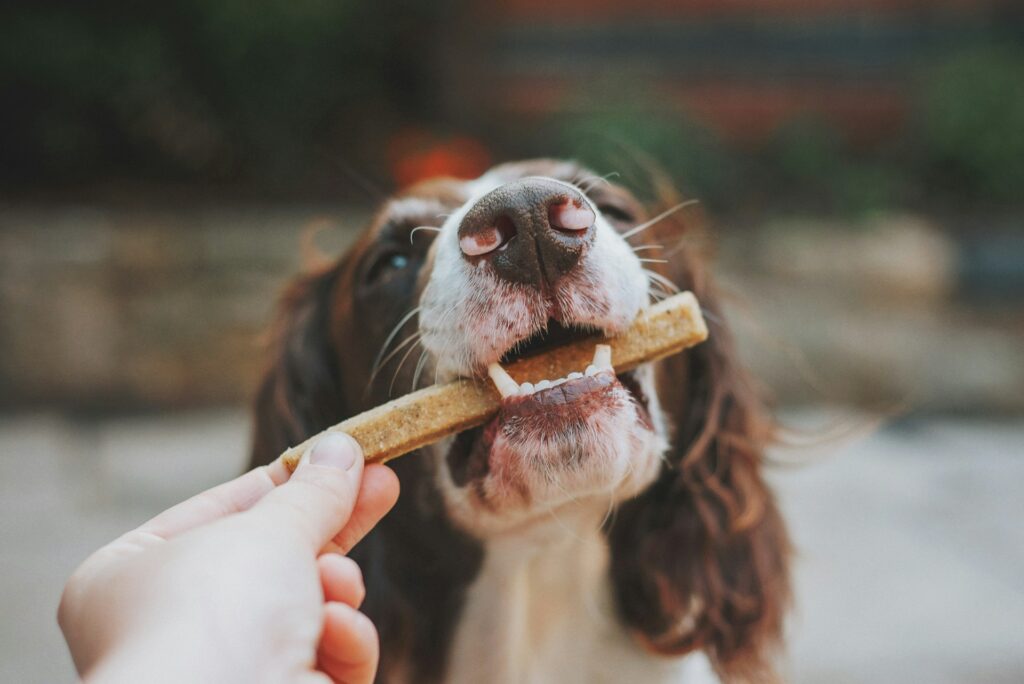
But how many treats are too many? It’s very easy to go from “rewarding” to “overfeeding”, especially if multiple people in the household are sneaking snacks.
Let’s make it simple so you can keep using treats without quietly harming your dog’s health.
Why treat quantity actually matters
Extra treats don’t just add a bit of fun—they add real calories.
Over time, too many treats can cause:
- Weight gain
- Joint strain, especially in larger breeds
- Higher risk of diabetes and other health issues
- Less interest in regular meals
Most dogs won’t say no to extra snacks. It’s our job as humans to set the limits.
The 10% rule: an easy starting point
A common guideline vets use is:
Treats should make up no more than about 10% of your dog’s daily calories.
The other 90% should come from a complete, balanced dog food.
You don’t have to count every calorie exactly, but this rule helps you keep some perspective:
- Tiny dog → fewer treats
- Large dog → more “room” for treats, but still not unlimited
What does that look like in real life?
Let’s take a simple example just to visualize it.
Imagine a medium-sized dog who needs roughly 800 calories per day (this is just a ballpark number).
- 10% of 800 = 80 calories from treats
- The other 720 calories should come from regular meals
If a training treat is about 3–5 calories each, that dog could easily have:
- Around 15–20 small training treats in a day
if you reduce meal portions slightly or stay strict on everything else.
You can often find “calories per treat” on the packaging of commercial treats. For homemade treats (like bits of chicken), you don’t need to be perfect—just keep portions small and watch your dog’s weight over time.
Size, age and activity level all matter
Two dogs can eat the same number of treats and have very different outcomes.
Factors to think about:
- Size: A treat that’s tiny for a Labrador can be a full snack for a Chihuahua.
- Age: Senior dogs may need fewer calories overall.
- Activity level: A dog who hikes, runs or does sport training may burn far more than a couch potato.
- Health conditions: Dogs with diabetes, joint issues or special diets may need stricter limits.
If your vet has ever said “we should watch their weight,” that’s a sign to be extra mindful with treats.

Training days vs. “quiet” days
On training-heavy days, it’s normal to use more treats.
To balance it out, you can:
- Break treats into the smallest pieces your dog still finds exciting.
- Use part of your dog’s regular kibble as training rewards.
- Slightly reduce meal sizes on big training days (ask your vet if your dog has medical issues).
On quiet days, keep treats lighter and focus more on play, toys and affection.
Using lower-calorie options as part of your treat toolbox
Not every treat has to be rich and high-calorie.
You can mix in:
- Plain carrot sticks
- Green beans (plain, no salt)
- Cucumber slices
- A small spoon of plain pumpkin or sweet potato
Some dogs love these. Others still want the “good stuff” (like meat or cheesy treats). Either way, having some lighter options gives you more flexibility.
Signs you’re giving too many treats
It’s not always obvious in the moment, but your dog’s body will tell you over time.
Watch for:
- Ribs are hard to feel under a thicker layer of fat
- No visible waist when you look from above
- Your dog seems lethargic or gets tired more easily
- Your vet gently mentions “We should keep an eye on their weight”
If that happens, don’t beat yourself up. Just adjust:
- Reduce treat quantity
- Make each piece smaller
- Use more low-calorie treats
- Talk to your vet about a safe weight-loss plan if needed
How to set a treat routine that actually works
A simple system that works for many households:
- Choose one treat jar or pouch for the day.
- Put that day’s treats inside.
- When it’s empty, you’re done with treats until tomorrow.
- Tell everyone in the family about the plan.
- Kids, partners, grandparents—everyone.
- No extra secret snacks from the table.
- Mix the treats.
- Some high-value ones (meaty, soft).
- Some lower-calorie ones (kibble, veggies).
This keeps your dog happy and motivated without accidentally doubling their calorie intake.
FAQ: Treat Portions for Dogs
Q: Can I give my dog treats every day?
Yes, most dogs can have treats daily as long as they stay within that rough 10% of daily calories and maintain a healthy weight. Daily treats used for training or bonding are perfectly fine in a healthy dog.
Q: My dog is already overweight. Should I stop treats completely?
You don’t have to stop forever, but you might need to cut back and switch to lighter options while working on weight loss. Your vet can suggest how many calories your dog should get per day and help you plan treats around that.
Q: Is it okay to give a “big treat” sometimes?
Occasional bigger treats (like a special chew) are okay for many dogs, as long as you balance the rest of the day—fewer small treats and possibly slightly smaller meals.