
Snow zoomies are fun—frozen paws are not.
If you live somewhere with real winters, your dog’s gear matters just as much as yours. The right boots, jackets and routine can keep your dog comfortable, even on icy sidewalks and slushy streets.
Here’s how to protect your dog in cold weather without skipping walks altogether.
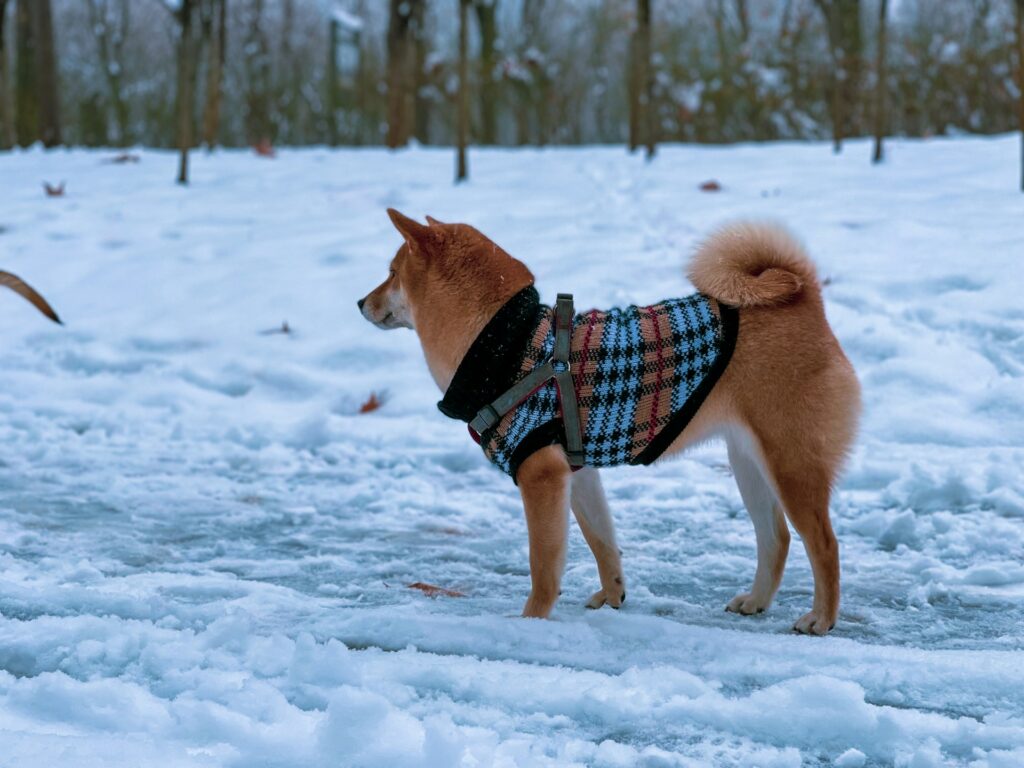
How cold is “too cold” for dogs?
It depends on:
- Coat type – A Husky and a short-haired Chihuahua experience winter very differently.
- Size – Smaller dogs lose heat faster.
- Age & health – Seniors and dogs with joint or heart issues may struggle more.
Some clues your dog is getting too cold:
- Shivering or trembling
- Holding up paws or refusing to walk
- Curling up tightly and trying to turn back home
- Moving stiffly after coming inside
If your dog looks uncomfortable, cut the walk short and get them warmed up.
Protecting paws from ice, salt and snow
Winter sidewalks can be hard on paws:
- Ice and packed snow
- Small sharp chunks hidden under powder
- Salt and de-icing chemicals that can sting or dry out pads
To help:
- Try dog boots for serious winter or heavy salting
- If your dog won’t wear boots, apply a paw balm before walks to add a bit of protection
- Rinse or wipe paws with warm water when you get home
- Check between toes for clumped snow or ice balls
If your dog suddenly stops and refuses to move, they might have a painful ice chunk between the toes—check and gently remove it if you can.
Jackets and sweaters: not just fashion
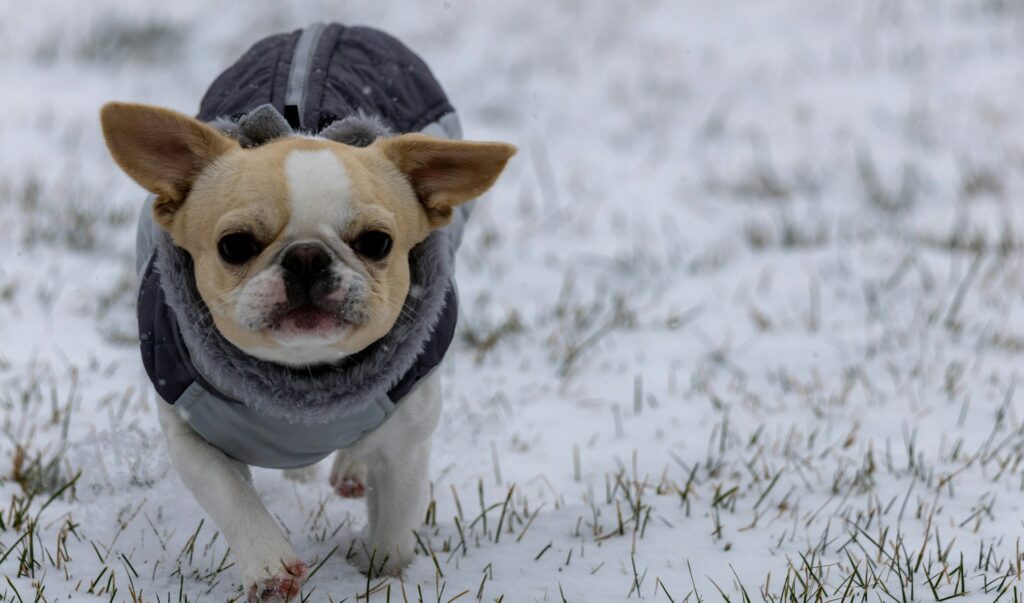
Not every dog needs a jacket, but many do, especially:
- Short-coated breeds
- Toy and small dogs
- Seniors or underweight dogs
- Dogs who stand and shiver shortly after going outside
A good winter jacket should:
- Cover the chest and belly area as much as possible
- Allow free movement of shoulders and legs
- Be snug but not restrictive
- Use closures that are comfortable and easy to fasten
If your dog freezes and refuses to move in their new coat, pair it with lots of treats and start by letting them wear it indoors for short periods.
Adjusting walk length and routine in winter
You don’t have to become a hermit in winter, but it’s okay to adjust your routine.
You can:
- Swap one long walk for two or three shorter walks
- Increase indoor activities on bitterly cold days:
- Nose games
- Trick training
- Short play sessions
- Use indoor toys like snuffle mats, food puzzles and tug toys to burn energy
The goal is to keep your dog physically and mentally active, even if time outside is limited.
Visibility and safety in the dark
Short winter days often mean walking in the dark—before work, after work, or both.
To stay visible:
- Use a reflective harness or leash
- Add a small LED light to your dog’s collar or harness
- Wear reflective clothing or an armband yourself
This helps drivers, cyclists and other walkers see you in time.
FAQ: Dog Winter Safety
Q: Does every dog need boots in winter?
No, but many dogs benefit from boots, especially in areas with heavy salting or on very cold days. If your dog limps, licks paws a lot after walks, or resists going outside, boots or paw balm might help.
Q: My dog hates wearing boots. What can I do?
Introduce them slowly. Start by touching the paws, then putting on one boot for a second, rewarding, and removing it. Build up to wearing all four boots indoors before expecting full walks outside.
Q: Can dogs get sunburned in winter?
Yes—especially light-skinned dogs or those with thin coats. The sun can reflect off snow and increase exposure. If you’re outside for long periods, ask your vet about dog-safe sun protection.